PP tire bead pad: a "precision pad" between the tire and the wheel rim
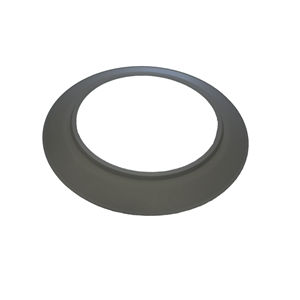
In the BOM (Bill of Materials) for tire manufacturing, the cost of Circular Plastic Flap often accounts for less than 2%. However, this annular component sandwiched between the steel wire ring and the rim flange is the final hurdle in determining whether the tire can be called a "qualified product". If the tread is the outer layer of the tire, then the rubber track is the "ankle" of the tire - it does not require frequent movement, but must be absolutely stable.
Not just 'gaskets': microscopic analysis of stress state
Many people mistakenly believe that the tire bead partition is just a cushion used to fill gaps, but in fact it is not. During the process of tire inflation and shaping, a significant axial force is generated in the bead area, attempting to stretch the bead outward. At this point, the PP tire bead pad is subjected to a complex "three-point compression" state: the inner side is pressed against the 15 ° conical surface of the wheel rim (for truck tires), the outer side supports the root of the steel wire ring, and the bottom is subjected to the wrapping pressure of the tire sidewall rubber.
If the compressive strength of the partition is insufficient, "creep" will occur - that is, irreversible plastic deformation will occur under sustained pressure. This deformation can cause the tire to bounce during dynamic balance testing, and more dangerously, it can change the contact angle between the tire bead and the wheel rim, causing wrinkles in the airtight layer at the edge and becoming the source of chronic air leakage. Therefore, the primary indicator for evaluating the quality of a tire bead separator is not hardness, but the compression permanent deformation rate. The top level PP tire bead separator in the industry must be controlled within 15% under standard testing at 70 ℃ for 22 hours.
The 'Modification' War of PP Materials
When it comes to PP bead separators, we have to talk about the modification technology of polypropylene materials. Although pure polypropylene is inexpensive and has good processability, its temperature resistance and rigidity are difficult to meet the requirements of high-performance tires. Especially with the high-speed development of radial tires, the bead temperature of the tire may exceed 100 ℃ after continuous driving, and ordinary PP will soften and fail at this temperature.
To solve this problem, material engineers adopted the "alloying" strategy. The current mainstream high-end PP bead separators use PP/POE (polyolefin elastomer) blend system and are filled with 20% -30% talc or mica powder. The layered structure of talc powder can effectively block heat transfer and increase the thermal deformation temperature to above 135 ℃; The addition of POE is like adding steel bars to concrete, greatly improving the inherent brittleness of PP and maintaining its toughness in low temperature environments. This modified PP material enables the tire bead separator to have mechanical strength close to engineering plastics while being lightweight.
The 'black technology' of surface treatment
The combination of tire bead separators and rubber has always been a pain point in the industry. Due to PP being a non-polar material, its surface energy is extremely low, just like water droplets falling on lotus leaves, making it difficult for rubber to firmly adhere to it. Early products often experienced "delamination" phenomenon, where the partition separated from the tire bead rubber, resulting in tire scrap.
Modern technology has solved this problem through plasma torch treatment. On the production line, the formed PP separators are scanned by a row of high-temperature plasma spray guns, breaking the C-H bonds on the surface and forcibly attaching polar groups such as hydroxyl (- OH) or carboxyl (- COOH) groups. After this "activation" treatment, the surface tension of the separator increases from 28 dyn/cm to over 40 dyn/cm. After being coated with a special adhesive, the peel strength with rubber can be increased by more than three times. Some high-end products even integrate laser etched textures inside injection molds, forming micrometer level mechanical locking structures on the surface of the partition, further strengthening the physical interlocking effect.
From 'standard parts' to' customization '
In the past, tire bead separators were usually standard components of universal specifications. But with the increasingly stringent requirements of host manufacturers for NVH (noise, vibration, and acoustic roughness), the design of partitions is beginning to move towards customization. For example, in response to the high torque characteristics of electric vehicles, engineers will design specific damping protrusions on the partition to suppress the resonance frequency of the wheel rim; In explosion-proof tires (gas deficient tires), PTFE (polytetrafluoroethylene) micro powder is added to the partition formula to reduce the friction coefficient and prevent wheel rim overheating damage, as the tire beads need to withstand severe friction caused by the collapse of the vehicle's weight.
The evolution of PP bead separators from a simple polypropylene sheet to a precision component that integrates materials science, surface chemistry, and structural dynamics reflects the ultimate pursuit of detail in the entire rubber industry. Although hidden behind the scenes, it truly supports every safe arrival.
Changshu Yongchengsheng Hardware Products Co., Ltd. specializes in the production and sales of tire bead separators and PP tire bead pads. If you need them, please contact us at+86-13506249539; Contact email: ljd706627@gmail.com