PP tire bead pad: a key auxiliary material in tire manufacturing
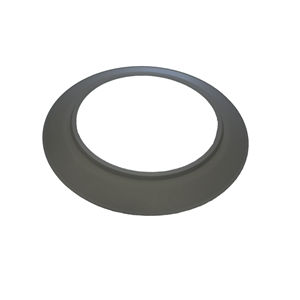
In the tire production workshop, there is a commonly overlooked but crucial auxiliary component - the PP tire bead pad. It does not directly constitute the tire body, but plays an irreplaceable role in the storage, transportation, and molding process of the bead components. In recent years, with the breakthrough of polypropylene (PP) modification technology, Triangle rubber tire partition has gradually replaced traditional materials and become the mainstream choice in the industry due to its comprehensive performance advantages.
The inevitability of PP from the perspective of material pain points
The traditional tire bead isolation scheme has obvious shortcomings. Wooden partitions are prone to water absorption and expansion in humid environments, causing surface fibers to fall off and mix with the adhesive, resulting in impurity defects; Metal partitions have a large weight, high labor intensity during transportation, and contact with rubber after surface oxidation can cause vulcanization pollution; Although paper partitions are lightweight, they have extremely poor pressure resistance. If stacked in three or more layers, they will collapse and deform, causing the tire beads to be compressed and lose their roundness.
The emergence of Rubber Tray has precisely filled these gaps. Polypropylene itself is a semi crystalline thermoplastic polymer, and after glass fiber reinforcement or mineral filling modification, its bending modulus can reach the range of 1500-200000 PSI, which is sufficient to withstand the stacking pressure of multiple layers of tire beads without creep deformation. At the same time, the molecular structure of PP determines its extremely low permeability to water vapor, and it will not absorb moisture or warp even after long-term storage in a workshop environment with a relative humidity of 90%. Its dimensional stability is much better than that of wooden and paper products.
Surface treatment determines the quality of demolding
The tire bead components are in an uncured state during parking, and the surface of the rubber material has extremely high self adhesiveness. The surface treatment method of the bead separator directly affects the isolation effect. There are currently two mainstream processes: one is mirror polishing of the mold surface to control the finished product's Ra value within the range of 0.4-0.8 μ m, relying on physical smoothness to reduce contact adhesion; The second is to coat the surface with organic silicon or fluorine based anti sticking coating, further reducing the peeling force to below 0.5N/cm ². In actual production, the repeated use of coated separators can reach several times that of bare boards, and the overall cost is actually lower.
It is worth noting that lower surface roughness is not necessarily better. Overly smooth Chafer Discs are prone to producing an "airtight effect" during vacuum suction and picking by robotic arms, leading to suction failure or difficulty in layer separation. Therefore, the design of high-quality products will set up micro exhaust grooves or texture bands in specific areas of the disc, ensuring both isolation performance and automation grabbing efficiency.
Engineering considerations in structural design
The structural design of PP bead separators needs to comprehensively consider two dimensions: mechanical distribution and thermal management.
In terms of mechanics, the cross-sectional shape of the annular partition directly affects the stress transmission path. Solid flat plate structure is simple but requires a lot of materials and high cost; Honeycomb reinforced ribs can reduce material usage by 30% -40% while ensuring plane stiffness, while forming an air layer for insulation. Some high-end models are equipped with inclined guide angles on the inner wall of the ring, which automatically align the tire bead when placed, reducing manual adjustment time.
Thermal management is particularly crucial. The temperature of the newly extruded triangular rubber can reach 80-100 ℃, and it is difficult to dissipate heat when stacked in a closed space, which can easily cause local overheating and lead to the burning or premature vulcanization of the rubber material. The PP tire bead partition can reduce the interlayer temperature rise by 15-20 ℃ and significantly extend the safe parking window by opening radial heat dissipation holes on the disc surface or using hollow spoke design to introduce heat convection channels into the stacked system.
Refined management of specification system
The bead diameters of tires of different specifications vary greatly, ranging from 12 inches for passenger tires to 63 inches for engineering tires. If each tire is customized with a dedicated bead separator, inventory management will be extremely complex. The common practice in the industry is to establish a "specification coverage matrix", using eccentric ring design and adjustable positioning mechanism, so that a single partition model can cover 3-5 adjacent sizes of tire beads. For example, the inner diameter of a certain model of PP tire bead partition is designed to be 320mm. With an adjustment range of ± 15mm for eccentricity offset, it can adapt to various tire bead specifications within the range of 305-350mm, greatly reducing the types of spare parts and inventory occupied funds.
Changshu Yongchengsheng Hardware Products Co., Ltd. specializes in the production and sales of tire bead separators and PP tire bead pads. If you need them, please contact us at+86-13506249539; Contact email: ljd706627@gmail.com