How does PP tire bead pad change the manufacturing landscape
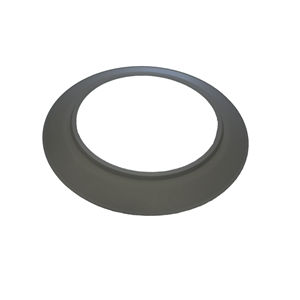
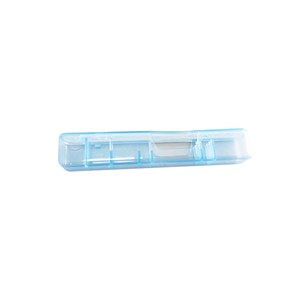
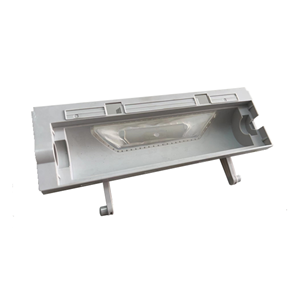
When you drive a car speeding on the highway, few people would think about the crucial steel wire bead inside the tire, which experienced such strict "protection" at its inception. This protector is the PP tire bead pad. If tires are the feet of a car, then rubber track is the closest armor for these feet during the "learning to walk" stage. Especially after the introduction of polypropylene (PP) material technology, tire bead partitioning has evolved from a simple isolation tool to an indispensable core consumable in modern tire lean production.
1、 Say goodbye to the nightmare of adhesion: the chemical advantages of PP material
In its uncured state, rubber acts like a strong chewing gum and is prone to sticking to contact objects. Traditional isolation methods often treat the symptoms rather than the root cause, while PP bead separators solve this problem at the molecular level.
Polypropylene belongs to non-polar crystalline polymers with extremely low surface energy, typically between 29-31 mN/m. This means that it has a natural repulsion towards polar rubber polymer chains. Compared to traditional metal plates that require frequent application of isolation powder, the Beam Bundle Release Liner can achieve "physical grade" dry isolation. This low surface energy characteristic not only eliminates the adhesion between the rubber material and the partition, but more importantly, avoids the harm of traditional isolation agents such as talcum powder to the workshop environment and workers' respiratory system, taking a big step towards cleaner and more environmentally friendly tire manufacturing.
2、 Precision Battle: Micro scale Size Control
In high-end tire manufacturing, the ellipticity error of the tire bead must be controlled within a very small range. The dimensional stability of the tire bead partition directly determines this.
PP materials are prone to uneven shrinkage during injection molding if the process is not properly controlled. Excellent PP bead separator manufacturers will strictly lock the molding shrinkage rate of the material between 1.0% and 1.5% by adding nucleating agents and mineral fillers. At the same time, through precision molds and strict cooling curve control, the flatness error of the partition is ensured to be less than 0.2mm. This micrometer level accuracy ensures that each layer of tire bead is uniformly stressed during stacking, and will not cause the steel wire ring to twist due to the small deformation of the partition, thus ensuring the high-speed dynamic balance performance of the tire at the source.
3、 The 'best partner' in the era of automation
With the advancement of Industry 4.0, robotic arms in tire factories are becoming increasingly popular. The design of PP bead separators must also adapt to this fast-paced automated flow.
On high-speed logistics lines, the weight of the partition directly affects the energy consumption and rhythm of the robotic arm. The density of PP material is only 0.9 g/cm ³, which is over 65% lighter than aluminum alloy, allowing the robotic arm to complete picking and placing actions at a faster speed. In addition, for automated visual recognition systems, PP bead separators are usually designed with specific color markings or QR code areas. Through laser marking technology, each partition can have a unique "ID card", which, together with the MES system, enables full lifecycle traceability management, which was unimaginable in the past.
4、 Win win situation between economic and environmental accounts
Although the procurement cost of a single PP tire bead partition may be slightly higher than paper or wooden products, its cost-effectiveness is extremely high throughout its entire lifecycle.
A high-quality PP tire bead separator can be used for 2-3 years under normal working conditions, with over 5000 cycles. The scrapped PP material can also be reused in the production of low-end injection molded parts through crushing and granulation, with a recycling rate of over 90%. In contrast, disposable paper partitions not only consume a large amount of wood, but also generate waste paper scraps that increase the cleaning costs of the workshop. In the context of the "dual carbon" goal, PP tire bead separators are undoubtedly a wise choice for enterprises to reduce costs and increase efficiency, and practice ESG concepts.
Changshu Yongchengsheng Hardware Products Co., Ltd. specializes in the production and sales of tire bead separators and PP tire bead pads. If you need them, please contact us at+86-13506249539; Contact email: ljd706627@gmail.com