Microscopic Geometry and Fluid Dynamics: An Analysis of the Underestimated Bead Spacer Technique
In the grand narrative of the tire industry, the roar of vulcanizing machines and the precision of molding machines always dominate the headlines, and as a tooling accessory, the Bead Spacer is often classified as a "low value consumable". However, when we delve into the microscopic world of tire manufacturing, especially from the perspectives of rheology and thermodynamics, we will find that this seemingly ordinary circular plate is actually a key medium for solving process pain points and improving product consistency. This article will go beyond the conventional functional introduction and re-examine the technical connotation of tire pads from the perspective of micro contact mechanics and interface engineering.
1、 The structural evolution from "surface contact" to "point support"
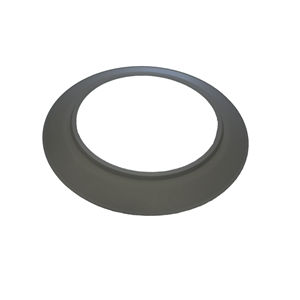
Early Tyre plates often used solid flat plate designs, with a simple and rough principle of isolation. However, in actual production, solid design brings about significant "contact thermal resistance" issues. Unsulfided apex rubber contains a large amount of volatile components, which can cause heat accumulation and moisture to accumulate over a large area of contact, making it easy to form "air pockets" or "water stains" on the contact surface, leading to tire bead defects or bubble defects.
The design concept of modern high-end Tire Plate has evolved into "micro dot support". The actual contact area between the partition and the tire bead is compressed to its limit through precision injection molding of radial ribs and grid like textures. This design not only significantly reduces the probability of adhesion, but more importantly, it constructs micro scale air convection channels. This micro level fluid management effectively balances the air pressure and humidity inside and outside the stacked tire beads, and is the first line of defense to prevent the "breathing effect" (moisture absorption) of semi-finished products during the turnover process.
2、 Deep game between interface energy and demolding mechanism
Why does the Bead Bundle Release Liner have to use special polymer materials? This involves deep-seated issues in interface chemistry. The surface energy of uncured rubber is extremely high, with a strong tendency for wetting and adhesion. If the surface energy of the partition material is higher than that of the raw rubber, the intermolecular forces (van der Waals forces) between the two will cause irreversible adhesion.
Therefore, high-performance bead separators typically use specially modified polypropylene (PP) or polytetrafluoroethylene (PTFE) coating materials. The critical surface tension of these materials is much lower than that of natural rubber, forming a thermodynamically 'non wetting system'. In addition, advanced partition surfaces are subjected to nanoscale etching or coated with long-lasting release agents to further reduce the friction coefficient. This precise control of the surface free energy of the material makes the bead separator no longer a passive isolator, but a functional component that actively regulates interface interactions.
3、 The Art of Matching Thermal Expansion Coefficient
In the circulation process of tire production, semi-finished products may undergo environmental changes from room temperature to high temperature drying rooms. The matching of the coefficient of thermal expansion (CTE) between the tire bead separator, steel wire ring, and triangular rubber is a commonly overlooked engineering challenge. If the difference in thermal expansion coefficients between the two is too large, under temperature fluctuations, there will be slight relative displacement or stress concentration between the partition and the tire bead, resulting in pre curing deformation of the triangular rubber or displacement of the steel wire ring.
In order to solve this problem, the new generation of tire bead separators has made breakthroughs in material composite technology. By adding glass fibers or special ceramic particles to the substrate, engineers can precisely regulate the linear expansion rate of the separator to make it as close as possible to the thermal behavior of rubber composite materials. This "responsive" design ensures that the bead components can maintain ultimate geometric stability in complex temperature changing environments, laying a solid foundation for subsequent tire dynamic balance performance.
4、 The carrier potential of intelligent logistics
With the implementation of Industry 4.0 in tire factories, the role of tire bead separators is undergoing a qualitative change. Traditional partitions are gradually being endowed with "intelligent attributes". For example, intelligent tire bead separators integrated with RFID (Radio Frequency Identification) chips can track the production batch, molding time, and process parameters of each stack of tire beads in real time. When materials with intelligent partitions enter the molding machine, the system automatically retrieves data for matching and verification, eliminating the risk of mixing from the source.
A more forward-looking design is to use the partition itself as an interface for automated logistics. The standardized appearance and specific positioning slots enable the robotic arm to accurately grasp the entire stack of tire beads like a pallet. The concept of "tooling as a carrier" greatly improves logistics efficiency and reduces uncertainty caused by manual intervention.
Changshu Yongchengsheng Hardware Products Co., Ltd. specializes in the production and sales of tire bead separators and PP tire bead pads. If you need them, please contact us at+86-13506249539; Contact email: ljd706627@gmail.com