Material Innovation of Beam Spacer: How PP Material Reshaps Tire Vulcanization Process
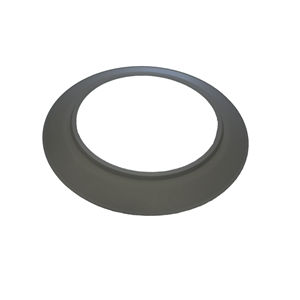
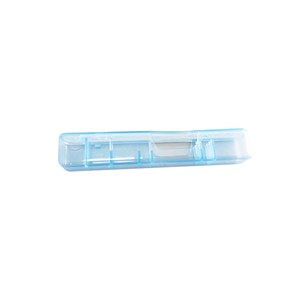
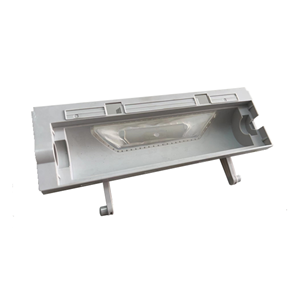
In the precision chain of tire manufacturing, the Bead Spacer, although seemingly small, plays a crucial role. As a key component that isolates the tire bead from the capsule during the vulcanization process, its performance directly determines the molding quality and production efficiency of the tire. With the breakthrough of polypropylene (PP) material technology, PP bead separators are gradually replacing traditional materials with their excellent comprehensive performance and becoming the preferred choice in modern tire industry.
The core advantage of Circular plastic flap lies in the scientific proportioning of its materials. By introducing specific beta nucleating agents and heat-resistant modifiers, modern PP bead separators achieve a perfect balance between strength and toughness. The impact strength of the simply supported beam gap can reach over 40kJ/m ², which means that under the frequent opening and closing impact of the vulcanizing machine, the partition is not prone to cracking or edge collapse. At the same time, its Vicat softening point temperature is raised to over 150 ℃, which can maintain stable geometric shape even in high-temperature and high-pressure vulcanization environments, ensuring precise replication of tire bead contours.
At the microstructure level, the Bead Bundle Release Liner also performs well. Its crystallinity is usually controlled between 60% -65%, and this highly ordered molecular arrangement endows the material with an extremely low coefficient of linear expansion (approximately 8 × 10 ⁻⁵/K). This feature is crucial as it ensures minimal dimensional changes in the partition under alternating hot and cold conditions, thereby avoiding capsule compression damage or tire bead deformation caused by thermal expansion and contraction. According to actual test data from a well-known tire company, the use of high crystalline PP separators reduces the frequency of capsule replacement by 70% due to separator deformation, significantly saving expensive capsule maintenance costs.
Surface characteristics are another key dimension for measuring the quality of PP bead separators. Through nanoscale surface treatment technology, a dense hydrophobic oil layer can be formed on the surface of the separator. Its surface contact angle can reach over 90 °, effectively preventing the penetration and adhesion of rubber compound during the vulcanization process. This "self-cleaning" feature not only ensures the smoothness of the tire bead surface, but also makes the demolded partition easy to clean, and can be put into the next use with a simple blow, greatly improving the production cycle.
From the perspective of sustainable development, PP bead separators also demonstrate strong vitality. Its carbon footprint throughout its entire lifecycle is much lower than that of traditional materials. Abandoned PP partitions can be recycled into industrial grade plastic products through professional granulation processes, achieving resource recycling. According to calculations, the large-scale use of PP bead separators can reduce solid waste emissions in tire factories by about 25%, contributing significantly to the achievement of green manufacturing goals.