Decoding the 'invisible guardians' in tire manufacturing
In the industrial aesthetics interwoven with rubber and steel, tires are not only the running feet of vehicles, but also the crystallization of modern technology precision cooperation. However, before the seemingly complete black circular structure was born, its manufacturing process went through a micro level "high-risk game". In this game, a little-known but crucial character - Bead Spacer, is writing a unique chapter about "isolation" and "protection" in industrial manufacturing in its own way.
1、 Chaos before formation and the builder of order
The manufacturing of tires is not simply a stacking of materials, but a precise transformation process from "chaos" to "order". Especially in the bead area, which is the lifeline where the tire meshes with the wheel hub, the steel wire ring, sidewall rubber, triangular rubber strip, and various reinforcement layers need to achieve millimeter level precise positioning in a very small space. Before entering the vulcanization tank, most of these components are in an "uncured" state, with a surface resembling fresh resin, possessing strong viscoelasticity and self adhesiveness.
Without effective intervention, this' stickiness' will become a fatal hazard. Imagine that before the high-temperature and high-pressure vulcanization, if the steel wire ring and rubber material adhere in advance, or if there is a slight displacement of each layer of material, stress concentration points or structural defects will occur inside the final formed tire. This defect is like a 'time bomb' when the vehicle is driving at high speeds.
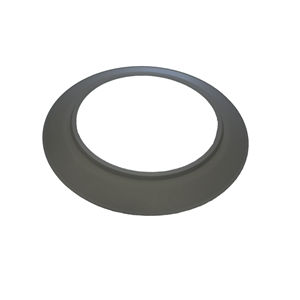
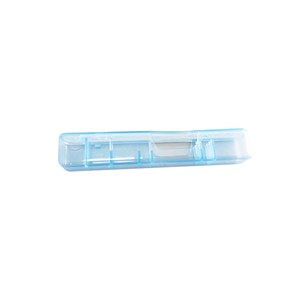
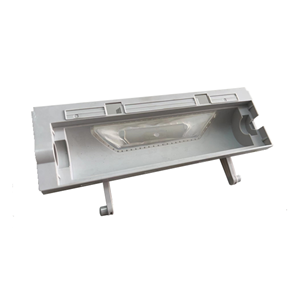
At this moment, Rubber Tray appeared. It is not a permanent component of the tire, but like an experienced 'on-site commander', it precisely intervenes between various components before chaos is about to occur. It provides not only physical isolation, but also a 'spatial commitment' to ensure that each component maintains its original independence and positional accuracy before the vulcanization reaction is initiated.
2、 Beyond the technological barriers of 'padding paper'
Many people may mistakenly think that the tire bead separator is just a heat-resistant "padding paper", but in fact it is not. Its manufacturing itself is a field with high technological barriers. A qualified tire bead separator must possess a dual personality of "rigidity and flexibility".
Firstly, it must have extremely high dimensional stability. During the repeated squeezing and winding process of the tire forming machine, the partition cannot be stretched or deformed, otherwise the "space" it protects will be distorted. Secondly, it must have excellent demolding performance. After vulcanization, the partition must be able to separate cleanly from the tire, leaving no residue or contaminating the rubber material.
More importantly, its heat and chemical resistance. Tire vulcanization is usually carried out in a high-temperature and high-pressure steam environment of 150 ℃ -180 ℃. The tire bead separator must maintain structural integrity, not melt or carbonize, and have a certain degree of breathability during this "purgatory" test, helping to remove volatile matter from the rubber material and ensuring that the tire interior is dense and free of pores.
Changshu Yongchengsheng Hardware Products Co., Ltd. specializes in the production and sales of tire bead separators and PP tire bead pads. If you need them, please contact us at+86-13506249539; Contact email: ljd706627@gmail.com