Evolutionary Theory of PP Tire Bead Partition Technology
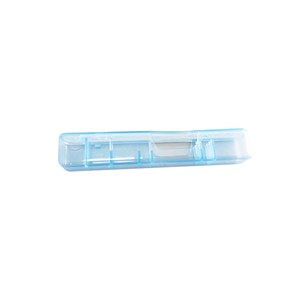
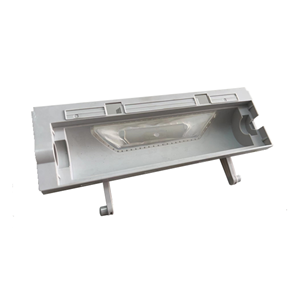
In the precision chain of tire manufacturing, the Bead Spacer was long regarded as a low tech "consumable", with its function simply defined as physical isolation. However, with the tire industry's extreme demands for uniformity, dynamic balance, and production efficiency, this perception is being completely overturned. Modern tire bead separators, especially high-performance PP tire bead separators, are undergoing a technological evolution from "passive isolation" to "active empowerment", becoming a key process carrier connecting raw materials and finished tires.
The core of this evolution lies in the deep integration of materials science and structural design. Traditional isolation solutions often struggle to balance the conflicting needs of "support" and "release": hard materials may damage the rubber, while overly soft materials cannot resist vulcanization pressure. The new generation of Beam Bundle Release Liner has successfully constructed a microstructure that combines rigidity and flexibility through nanoscale filler modification. The Vicat softening point is precisely controlled within the range of 135 ℃ to 145 ℃, and this data is not accidental, but rather to perfectly match the thermal history curve of the tire vulcanization cycle. In the initial stage of vulcanization, the partition provides sufficient rigid support to prevent displacement of the tire bead during the flow of rubber material; In the late stage of vulcanization and demolding, its specific thermal response characteristics can ensure rapid shrinkage and detachment of the partition, achieving "zero residue" peeling.
In addition to precise control of thermal properties, the optimization of rheological properties by Plastic tray is also remarkable. On the automated molding line, the bonding speed between the partition and the tire bead is extremely fast, which poses a severe challenge to the impact resistance of the partition. Data shows that the impact strength of the simply supported beam gap of the partition made of high toughness polypropylene substrate can reach over 8.5kJ/m2. This means that even in the process of high-speed automated grasping, the partition will not undergo brittle fracture even when subjected to instantaneous impact from the robotic arm. At the same time, in order to adapt to the production of tires of different specifications, topology optimization algorithms have been introduced into the cross-sectional profile design of the partition, which reduces the overall weight by 15% while ensuring that the strength of key stress points is not less than 38 MPa, thereby reducing the energy consumption of the logistics transmission system.
More noteworthy is that PP bead separators are becoming an important part of tire "green manufacturing". Unlike disposable paper partitions, modified PP materials have extremely high recyclability value. After crushing, granulation, and secondary modification, its mechanical performance retention rate can still reach over 85% of the new material. This closed-loop mode not only significantly reduces the cost of auxiliary materials for tire enterprises, but also reduces carbon emissions in the production process by about 40%. In addition, the special micro texture design on its surface (with a depth controlled at 10-20 μ m) can also form a micro air cushion effect during the vulcanization process, further assisting in gas discharge and improving the density of the tire.
From this, it can be seen that tire bead separators are no longer simple industrial consumables, but precision engineering components that integrate thermal, mechanical, and environmental concepts. PP bead separators, with their excellent data performance, are redefining the precision and efficiency of tire manufacturing, providing an indispensable "active empowerment" for the birth of every high-quality tire.
Changshu Yongchengsheng Hardware Products Co., Ltd. specializes in the production and sales of tire bead separators and PP tire bead pads. If you need them, please contact us at+86-13506249539; Contact email: ljd706627@gmail.com