Undervalued 'Process Variables': Microscopic Contribution of PP Tire Bead Pad to Tire Homogeneity
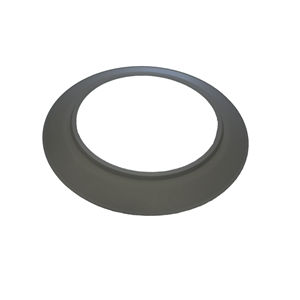
In the grand narrative of the tire industry, we are accustomed to discussing the reinforcing effect of nanoscale carbon black or the tonnage parameters of giant vulcanizing machines. However, it is often overlooked micro variables that determine whether a tire can resonate at high speeds. Among them, the PP tire bead pad, as a seemingly simple turnover tool, is gradually being re examined by the high-end manufacturing industry for its impact on tire homogeneity. And the bead separator is the optimal solution to address this micro pain point.
1、 The overlooked "stacking creep" effect
Before tire formation, the combination of wire rings and triangular rubber needs to be parked for a period of time. At this stage, the rubber molecular chains have not yet crosslinked and are in a highly elastic state. If there is a lack of effective support, stacked tire beads will undergo slow plastic flow under the action of gravity, which is known as "stack creep" in the industry.
This creep can cause a change in the cross-sectional shape of the triangular rubber at the bottom of the tire bead - the originally designed streamlined curvature may become flattened or asymmetrical. When such tire beads are sent to the molding machine, even if the subsequent molding process is perfect, the radial force fluctuation (RFV) and lateral force fluctuation (LFV) of the tire will increase due to the deviation of the initial geometric shape. At this point, the function of Apex Holder is not just to "isolate", but as a "shaping mold" that forcibly maintains the cross-sectional shape of the adhesive material during parking, resisting deformation caused by gravity.
2、 The "thermodynamic" advantages of PP materials
Why must it be a tire bead partition instead of other materials? This needs to be explained from a deep logic of thermodynamics and material compatibility.
Rubber formulations typically contain various oils and plasticizers, which are prone to migration at high temperatures or pressures. Ordinary PS (polystyrene) or ABS materials may swell and deform due to poor oil resistance, causing the partition and rubber material to "grow" together. Polypropylene (PP) has excellent non-polar characteristics and extremely poor compatibility with rubber hydrocarbons (i.e., immiscible). This natural "repulsive force" constitutes a perfect anti stick barrier.
In addition, the production environment of tire factories has a huge temperature difference. From the constant temperature and humidity bonding zone to the hot and humid vulcanization zone, ordinary plastics may experience size drift due to thermal expansion and contraction. Circular plastic flaps have high crystallinity and low thermal expansion coefficient, and can maintain micrometer level dimensional stability in a wide temperature range of -10 ℃ to 80 ℃. This stability ensures that the positioning reference of the robotic arm is consistent every time it grabs the tire bead, thereby ensuring the dynamic balance performance of the tire.
3、 Management transformation from "consumables" to "assets"
In traditional concepts, tire bead separators are disposable or low value consumables. But with the advancement of Industry 4.0, PP tire bead separators are being transformed into fixed assets for enterprise management.
Due to its extremely high durability (usually reusable for more than 2000 times), companies have begun to introduce smart PP tire bead separators with RFID chips. These partitions are not only load-bearing tools, but also nodes for data collection. The system can monitor the cleaning cycle, wear status, and flow trajectory of each partition on the production line. Once there is excessive wear or deformation of the partition, the system will automatically alarm and remove it to prevent batch quality accidents caused by tooling failure. This refined management has shifted quality control from "post inspection" to "process prevention".
4、 Conclusion: Details determine life and death
The manufacturing of tires is a war about "control" - controlling temperature, pressure, and deformation. During this process, the tire bead partition played a silent "controller" role. Especially the PP bead separator, which utilizes the wisdom of material science to solve the problems of viscosity and creep in rubber processing.
For tire manufacturers who pursue ultimate quality, focusing on the material, precision, and lifespan of PP bead separators is actually paying attention to the core safety genes of tires. In this invisible corner, every precise isolation and support adds an invisible insurance to the safe driving of the vehicle.
Changshu Yongchengsheng Hardware Products Co., Ltd. specializes in the production and sales of tire bead separators and PP tire bead pads. If you need them, please contact us at+86-13506249539; Contact email: ljd706627@gmail.com