Precision Game at the Microscopic Scale: The Role of PP Tire Bead Pad in Tire Uniformity Control
When people talk about tire quality, their attention often focuses on rubber formula, belt angle, or tread pattern. But in the semi-finished workshop of the tire factory, a game about microscale accuracy has never stopped. One of the key factors determining whether this tire can maintain dynamic balance during high-speed driving is actually a thin plastic disc - Plastic tray. Among numerous materials, specially modified bead caps are quietly changing the quality standards of tire manufacturing with their unique physical properties.
The overlooked 'geometric transmission'
The heat setting process of steel wire triangle rubber (Apex) is crucial in tire molding technology. The temperature of the newly extruded triangular rubber is usually above 80 ℃, and the internal polymer segments are in an active state, which is prone to creep. If there is a lack of support at this critical stage, even during the process of stacking and settling, the "collapse waist" phenomenon caused by self weight will distort the cross-sectional shape.
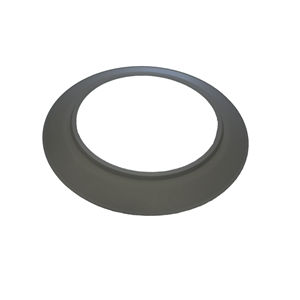
The core value of the PP tire bead pad is that it serves as a temporary 'physical boundary'. It not only separates two layers of rubber, but also forces the rubber components to follow a predetermined geometric trajectory during the cooling shrinkage process. If the tolerance of the curvature of the partition is too large, or if the material is too soft and causes rebound after being subjected to force, this error will be directly transmitted to the triangular rubber, thereby affecting the final uniformity of the tire. Therefore, the stability of the partition material is directly linked to the driving comfort of the tires.
Thermodynamic Compromise of PP Materials
Why can tire bead partition replace traditional materials in fierce market competition? The answer is hidden in the unique thermodynamic curve of polypropylene.
Compared to ABS or PVC, PP material has a thermal expansion coefficient closer to the cooling curve of rubber. In environments with large temperature differences in the workshop, PP partitions exhibit excellent dimensional stability. A often overlooked detail is that PP material belongs to non-polar crystalline polymers with extremely low surface tension. This means that uncured rubber (mostly weak polar or non-polar substances) is difficult to form strong intermolecular forces with it. This natural sense of rejection makes it almost effortless for workers to tear open partitions, and leaves no headache inducing "marks" or mucosal residue on the rubber surface.
In addition, to cope with the high-frequency use of automated production lines, modern PP bead separators commonly use co polymerized polypropylene or add elastic toughening agents. This modification allows the partition to maintain toughness even when circulating between sub zero low temperature warehouses or above zero high temperature vulcanization zones, avoiding the risk of ordinary plastics becoming brittle and breaking in winter.
Cognitive upgrade from "consumables" to "process equipment"
Today, with the deepening of the lean production concept, the role of tire bead separators is undergoing a transformation. It is no longer considered a disposable consumable, but is defined as a precision 'process equipment'.
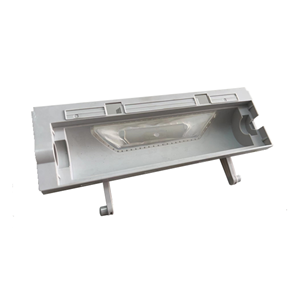
The design of high-end PP tire bead separators has incorporated fluid mechanics considerations. The reinforcing ribs on the surface of the partition are not randomly arranged, but are calculated to disperse the stacking pressure; The design of the edge guide angle is to cooperate with the vacuum suction cup or gripper of the robotic arm, reducing the failure rate of grasping. Moreover, some cutting-edge partition manufacturers have started adding anti-static agents and lubricants to PP raw materials to further reduce the surface friction coefficient and ensure that ultra-thin triangular adhesives are not pulled during rapid separation.
Changshu Yongchengsheng Hardware Products Co., Ltd. specializes in the production and sales of tire bead separators and PP tire bead pads. If you need them, please contact us at+86-13506249539; Contact email: ljd706627@gmail.com