Hidden champion from the perspective of circular economy: the full lifecycle value of PP tire bead pads
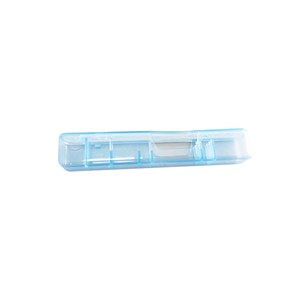
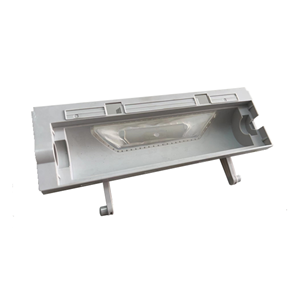
Under the wave of "dual carbon" strategy and green manufacturing, the tire industry's focus is shifting from the fuel consumption performance of end products to the sustainability of every aspect of production. In this grand narrative, the Bead wrap - an auxiliary tool that usually hides between steel wire triangles - is undergoing a transition from being a "cheap consumable" to a "circular asset". Especially the PP tire bead pad, with its unique closed-loop recycling potential, has become an indispensable footnote in the ESG reports of tire companies.
Underestimated 'carbon footprint'
In traditional concepts, rubber tray is a consumable item that is discarded upon damage. However, with the rapid expansion of tire production capacity, a factory with an annual output of 5 million sets can produce tens of thousands of partitions per day. If materials that are difficult to degrade or have extremely high recycling costs are used, the amount of solid waste and carbon emissions generated will be astonishing.
The introduction of PP (polypropylene) material has changed this situation. As a thermoplastic, PP has extremely friendly recycling properties. When a piece of Tire Plate is retired after thousands of cycles and surface wear and tear, it does not become a burden on the landfill. Through crushing and granulation, these waste partitions can be converted into slightly lower grade recycled materials, which can be reused in the production of industrial pallets or packaging boxes with low mechanical performance requirements. This "cradle to cradle" lifecycle perfectly aligns with the core concept of circular economy.
The chemical logic behind process adaptability
Why did PP material become the protagonist of this green transformation? This needs to start with the medium environment of the rubber industry.
The tire production site is filled with various oily substances, anti-aging agents, and plasticizers. Many common plastics will swell or stress crack after long-term exposure to these chemicals. PP material has excellent chemical corrosion resistance, especially strong resistance to non-polar solvents. This chemical inertness ensures that the partition will not experience performance degradation due to contact with rubber additives throughout its entire service life, thereby ensuring the quality and purity of the recycled material.
In addition, the density of PP material is only about 0.9g/cm ³, which is currently the lightest among commonly used plastics. This means that when transporting the same number of partitions, PP material can significantly reduce fuel consumption. For large tire groups that need to allocate materials across regions, the logistics carbon reduction effect brought about by this lightweighting can accumulate into a considerable green account.
Asset Rebirth under Digital Management
Modern tire factories are introducing RFID (Radio Frequency Identification) technology to manage Plastic trays. By embedding chips inside the partition, the system can accurately track the usage frequency, maintenance records, and even the location of each partition.
This digital management completely subverts the previous extensive model of "throwing away when it breaks down". When the system detects a small crack in a partition, it can trigger a maintenance warning instead of waiting for it to be completely scrapped. When recycling, analysis based on historical data can also help manufacturers optimize formulas, such as adding fiberglass reinforcement at specific stress points, thereby extending the service life of the next generation of products. This continuous improvement based on data feedback makes PP bead separators no longer a static tool, but a dynamic and optimizable production asset.
Changshu Yongchengsheng Hardware Products Co., Ltd. specializes in the production and sales of tire bead separators and PP tire bead pads. If you need them, please contact us at+86-13506249539; Contact email: ljd706627@gmail.com