Microscopic Shaping and Thermodynamic Barrier: The Hidden Game of PP Tire Bead Pad at the Vulcanization Interface
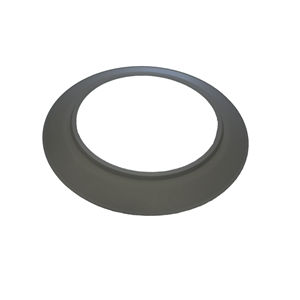
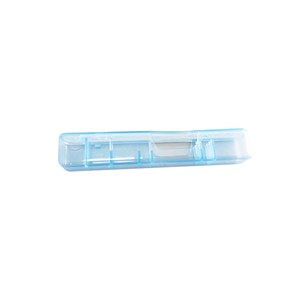
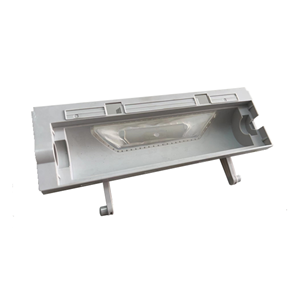
In the high-temperature and high-pressure chemical conversion process of tire vulcanization, the compactness and adhesion of the bead area directly determine the tire's airtightness and high-speed safety. At this stage, tire bead partition plays not only the role of a physical pad, but also a dual executor of micro interface shaping and thermodynamic barrier. It cleverly combines materials science and structural mechanics to solve the core problem of "how to stick" and "how to stick firmly" the tire bead in the early stage of vulcanization.
Thermodynamically Inert Construction of Constant Temperature Bonding Environment
The ambient temperature around the vulcanizing machine often exceeds 80 ℃, and ordinary polymer materials are prone to undergo glass transition under these conditions, leading to size shrinkage. The high crystallinity polypropylene selected by Bead Spacer typically has a heat distortion temperature (HDT) higher than 140 ℃, which allows it to maintain stable molecular chain arrangement even in high-temperature operating environments. This thermodynamic inertness ensures that the partition does not undergo thickness changes caused by thermal expansion when repeatedly entering and exiting the heat radiation zone of the vulcanizing machine, thereby maintaining a constant micro gap between the bottom of the tire bead and the positioning surface of the mold, ensuring the uniformity of heat conduction.
Shear force control of non Newtonian fluid interface
The surface of the raw tire bead is covered with high viscoelastic uncured rubber material, which belongs to a typical non Newtonian fluid. At the moment of the tire blank entering the mold, if the surface energy of the partition is too high, the rubber material will produce a "wall slip" obstruction. The PP tire bead pad undergoes special plasma surface treatment or precision polishing to form an interface with extremely low surface energy. This interface can minimize the adhesion work between the rubber material and the partition, allowing the tire bead to slide into the heel area of the mold in an almost ideal rigid motion under the action of gravity, avoiding tire bead flipping or local wrinkling caused by viscous resistance.
Distributed bearing of stress concentration points
At the moment when the vulcanization capsule is pressurized, the bead area bears a huge linear load from inside the capsule. The unique R-angle contour design of the PP bead separator actually serves as a stress disperser. It changes the stress concentration phenomenon caused by traditional right angle contact, transforming the concentrated linear load into a uniform surface pressure distribution. This decentralized load-bearing mechanism forces the bead wire ring to undergo slight elastic deformation during the initial stage of vulcanization, thereby adaptively filling the groove of the bead seat of the mold, achieving atomic level bonding between the metal mold and the rubber skeleton.
Construction of microchannels for gas discharge
During the vulcanization process, a closed high-pressure air pocket is easily formed between the mold and the tire bead, resulting in insufficient rubber or poor adhesion. The high-quality PP tire bead partition incorporates micro serrated or grid shaped exhaust structures in the edge design. These microstructures, which are difficult to detect with the naked eye, form high-speed channels for gas escape, rapidly evacuating residual air between interfaces before the sulfurization pressure is established. This exhaust mechanism is the last line of defense to prevent the formation of air holes, sponge layers, or bubbles in the tire bead area.
In summary, PP tire bead separators have successfully resolved multiple risks such as thermal expansion, contraction, viscosity blockage, and gas residue in the micro battlefield of vulcanization interface through excellent thermal stability, precise interface shear force control, and innovative stress dispersion design. They are an indispensable key auxiliary material for the tire industry to move towards precision manufacturing.
Changshu Yongchengsheng Hardware Products Co., Ltd. specializes in the production and sales of tire bead separators and PP tire bead pads. If you need them, please contact us at+86-13506249539; Contact email: ljd706627@gmail.com