High performance PP bead separators: guardians of tire manufacturing accuracy
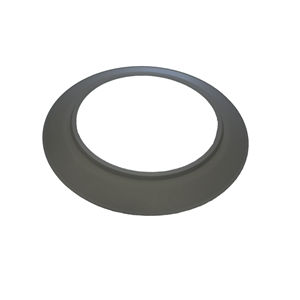
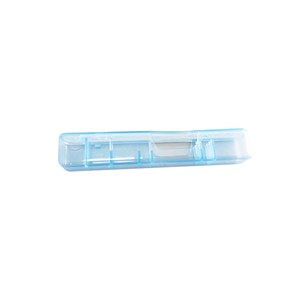
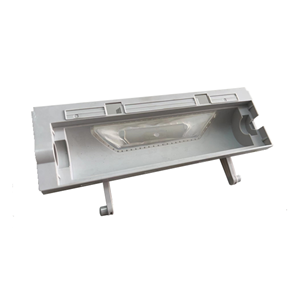
In today's tire industry that pursues ultimate precision, every tiny process detail may affect the quality of the final product. As a key fixture in the tire vulcanization process, the core task of the tire bead separator is to ensure the precise separation of rubber and steel wire rings in the tire bead area under high temperature and pressure environment, and prevent adhesion. This seemingly simple function actually imposes extremely strict requirements on the physical properties of the material. Traditional wooden or paper partitions are unable to meet the production needs of modern assembly lines due to moisture absorption deformation, insufficient strength, and short lifespan.
The emergence of polypropylene (PP) bead separators marks an important innovation in tire auxiliary material technology. Through polymer material modification technology, modern PP bead separators have achieved significant breakthroughs in key performance indicators. Its density is usually controlled at around 0.91g/cm ³, which means that while ensuring the same strength, its weight is reduced by nearly 40% compared to traditional materials, greatly reducing the labor intensity of workers and improving the automation efficiency of the production line.
In terms of mechanical performance, high-quality PP bead separators perform particularly well. Its tensile strength is stable between 30-40 MPa, and its bending modulus can reach 1600-2200 MPa. This combination of high rigidity and high toughness ensures that the partition can maintain geometric stability even under hundreds of tons of mold clamping pressure from the vulcanizing machine, avoiding defects such as missing rubber or irregular shape of the tire bead caused by deformation. At the same time, its thermal deformation temperature is strictly controlled above 110 ℃ -120 ℃, which can easily cope with the instantaneous high temperature environment of 150 ℃ -180 ℃ during tire vulcanization.
Surface quality is another core indicator for measuring the quality of tire bead separators. The high-precision mold processing technology enables the surface roughness (Ra) of PP bead separators to be stably controlled within the range of 0.4 μ m-0.8 μ m. This mirror like smoothness effectively avoids appearance defects such as dents, bubbles, or scratches on the surface of the tire bead, significantly improving the yield and aesthetics of the tire. In addition, the extremely low water absorption rate (<0.01%) of PP material enables it to maintain dimensional stability in humid environments, completely solving the positioning deviation problem caused by traditional materials due to moisture absorption and expansion.
From the perspective of the entire lifecycle, PP bead separators exhibit significant economic and environmental advantages. It has excellent durability and can be reused 300-500 times or more, greatly reducing the cost of consumables procurement and warehouse management pressure for enterprises. More importantly, polypropylene material is a recyclable resource that can be recycled after disposal, in line with the current trend of green, low-carbon, and sustainable development in the manufacturing industry.
In summary, PP bead separators, with their comprehensive advantages of lightweight, high strength, high temperature resistance, and environmental friendliness and recyclability, have become an indispensable precision component in the modern tire manufacturing process, providing a solid guarantee for the safety and high quality of tires.
Changshu Yongchengsheng Hardware Products Co., Ltd. specializes in the production and sales of tire bead separators and PP tire bead pads. If you need them, please contact us at+86-13506249539; Contact email: ljd706627@gmail.com