From "passive isolation" to "active shaping": PP tire bead pad reshaping bead technology
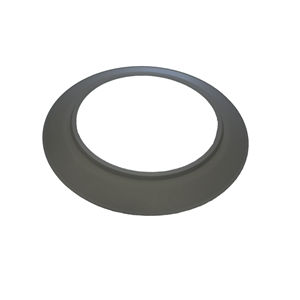
In the evolution history of tire manufacturing process, vulcanization and molding technology has always been innovating, while as an auxiliary tool, Circular plastic flap has been in the position of "supporting role" for a long time. However, with the increasingly stringent requirements for high-speed performance and safety of radial tires, the geometric accuracy of the bead area has become a bottleneck restricting tire quality. In this context, the PP tire bead pad is no longer just a "shim" used to elevate, but has evolved into a process equipment that can participate in bead shaping and optimize stress distribution, driving the transformation of tire manufacturing from extensive to precision.
Not just isolation: combating the 'memory effect'
The triangular rubber of tires has a strong "memory effect" after extrusion. If the surface of the Bead Spacer supporting it is uneven or has an inaccurate curvature, the semi-finished product will undergo microscopic creep under the action of gravity. This small deformation is often difficult to detect before vulcanization, but it will be permanently fixed after high-temperature vulcanization, causing the tire to appear "light" or "key" in the dynamic balance test, ultimately causing shaking during vehicle operation.
The core value of PP bead separators lies in their excellent "shaping ability". Thanks to the excellent rigidity and dimensional stability of polypropylene material, it can provide a reference surface that is absolutely flat and has precise curvature. This physical support effectively suppresses the natural collapse of the triangular rubber during the stacking process, ensuring that each layer of bead components maintains the geometric shape predetermined by the designer when entering the molding machine. This transition from "passive isolation" to "active shaping" is a key step in solving the uniformity problem of high-end tires.
Eliminating thermal resistance: improving the efficiency of sulfurization heat conduction
In addition to geometric accuracy, thermal conduction is also an important factor affecting the quality of tire beads. Traditional multi-layer cardboard or thick wooden boards, due to their inherent insulation properties, will form a thermal barrier during the vulcanization process. This can lead to uneven heating and varying degrees of vulcanization in the tire bead area, which in turn affects the tire to wire adhesion between the rubber and the steel wire.
PP bead separators have unique thermal conductivity characteristics, and their dense material structure does not trap air like porous paper. In the process of using PP bead separators, heat can penetrate the bead area more evenly, reducing the temperature difference between the inner and outer layers. This not only shortens the vulcanization time and improves production efficiency, but more importantly, ensures sufficient cross-linking of the tire bead rubber, thereby greatly enhancing the impact resistance and durability of the tire under extreme road conditions.
A comprehensive leap in process compatibility
Modern tire factories are moving towards fully automated logistics, which places extremely high demands on the compatibility of tire bead separators. Paper partitions, due to their easily worn edges and large thickness fluctuations, often cause AGV (Automated Guided Vehicles) or robotic arms to misjudge, slide, or even get stuck during gripping.
The PP bead separator is precision injection molded to have an extremely regular contour and consistent friction coefficient. Both magnetic gripping and pneumatic grippers can achieve precise control over it. In addition, PP materials can be modified for anti-static or UV resistance to adapt to different storage environments for different types of tire formulations. This high degree of process adaptability makes PP bead separators an ideal interface for connecting traditional manual handling with modern intelligent logistics systems.
In summary, the upgrade of tire bead separators is not a simple replacement of consumables, but a microcosm of the tire manufacturing system moving towards refinement and intelligence. By introducing PP bead separators, tire companies not only solve specific process problems, but also lay a solid physical foundation for future digital quality control.
Changshu Yongchengsheng Hardware Products Co., Ltd. specializes in the production and sales of tire bead separators and PP tire bead pads. If you need them, please contact us at+86-13506249539; Contact email: ljd706627@gmail.com