From 'disposable' to 'circular flow': How can PP tire bead pads reshape lean production in tire factories?
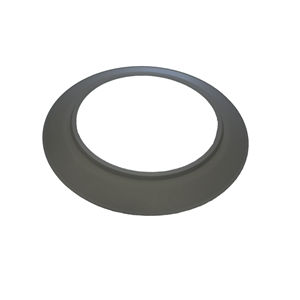
When discussing tire manufacturing processes, people's attention often focuses on expensive mixing machines, large molding machines, or high-temperature and high-pressure vulcanization tanks. However, at the junction of automated logistics lines and molding machines, a tool called PP tire bead pad is quietly becoming a new benchmark for measuring the lean management level of a tire factory. It is no longer just a rubber isolation pad, but also a key node for achieving efficient material flow.
In the past, tire factories often used wooden or cardboard as insulation pads, but they were prone to moisture absorption and debris, often scrapped after a few uses and turned into industrial waste. With the increasing demand for cost control and standardization in the industry, the emergence of the Bead Spacer has completely changed this situation, promoting the shift of tire bead management from extensive to refined.
1、 Pain points in craftsmanship drive material revolution
In the production of radial tires, the composite parts of steel wire rings and triangular rubber need to be parked and cooled for a period of time after the bonding is completed. If there is no suitable Apex Holder, the stacked tire beads will cause severe deformation at the bottom due to their own weight, and the adhesion between the rubber materials will cause difficulty in subsequent grasping.
Traditional alternatives have obvious shortcomings: wood is susceptible to rubber oil contamination and difficult to clean; Ordinary plastic has insufficient hardness and is prone to twisting when stacked. And Apex Disc perfectly solves these problems with the unique crystalline structure of polypropylene material. It is not only highly rigid and can withstand hundreds of kilograms of stacking pressure without collapsing, but more importantly, its surface energy is extremely low, making it difficult for uncured rubber to adhere. This "non stick pot" feature makes the removal and placement of tire beads smooth and easy, greatly reducing downtime caused by cleaning residue.
2、 The "invisible" technological advantage of PP material
Why is it said that current smart factories cannot do without Tire Plate? In addition to its basic isolation function, its performance in details determines the speed of production rhythm.
Firstly, its excellent size uniformity. On high-precision molding machines, the position of the mechanical arm grasping the tire bead is pre-set. PP material undergoes precision injection molding, with minimal thickness error for each piece, ensuring a constant total height of the entire stack of tire beads. This means that the robotic arm does not require repeated calibration, achieving zero errors in blind grasping, which is incomparable to wooden partitions.
Next is its "self-cleaning" and durability properties. The tire workshop environment is complex, with oil stains and dust scattered throughout. The surface of the PP tire bead separator is smooth and dense, and can be refreshed by rinsing with water or wiping with a cloth. Even in low-temperature warehouses below minus ten degrees Celsius or vulcanization workshops above 40 degrees Celsius, it still maintains stable physical properties and will not become brittle or crack like some engineering plastics. A high-quality PP partition can have a service life of 3-5 years and can be recycled thousands of times. Although the single purchase cost is slightly higher, the diluted single use cost is extremely low, truly achieving cost reduction and efficiency improvement.
3、 Assist in intelligent manufacturing and green circulation
In the intelligent transformation of modern tire factories, the role of tire bead separators is being upgraded. Many factories have started embedding RFID chips or printing QR codes on PP partitions, making them traceable intelligent vehicles. Through system tracking, management personnel can real-time grasp the position, batch, and even production status of each stack of tire beads, making inventory management transparent.
In addition, from the perspective of ESG (Environmental, Social, and Corporate Governance), PP bead separators conform to the concept of sustainable development. Polypropylene is a thermoplastic material that can be 100% recycled and pelletized at the end of its lifecycle for the production of non food grade industrial products, completely avoiding the pressure of non degradable waste on the environment. This coincides with the current global tire industry's pursuit of the goal of "green manufacturing".
Changshu Yongchengsheng Hardware Products Co., Ltd. specializes in the production and sales of tire bead separators and PP tire bead pads. If you need them, please contact us at+86-13506249539; Contact email: ljd706627@gmail.com