From anti sticking to shaping: the micro role of the Bead Spacer in smart factories
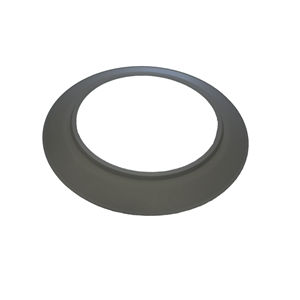
Under the wave of Tire Industry 4.0, every small accessory on the production line is undergoing a transformation from "extensive consumption" to "precision tooling". The bead spacer, a circular medium located between the steel wire ring and the triangular rubber, is a typical epitome of this transformation. For a long time, the industry has been accustomed to using cardboard as an isolation layer, but the drawbacks of cardboard being prone to moisture deformation and producing paper scraps that contaminate the rubber material have become intolerable shortcomings in the production of high-performance tires. Nowadays, Beam Spacer is reshaping the pre-treatment standards before tire molding with the excellent chemical inertness and dimensional rigidity of polypropylene material.
In depth exploration of the technical core of Circular plastic flap, its core competitiveness lies in the dual control of micro surface energy and macro structural strength. In terms of material selection, industrial grade products have abandoned ordinary homopolymer PP and instead adopted copolymer polypropylene with stronger impact resistance. This material maintains good toughness in a low temperature environment of minus 20 degrees Celsius and will not undergo brittle fracture like cardboard after being exposed to moisture. In terms of physical indicators, a mature injection molding formula can lock the tensile strength above 30 megapascals, which means that when stacking all steel tire rings up to 1.5 meters or even higher, the partition will not produce visible bending deformation, ensuring the verticality of each layer of steel wire rings.
In addition to strength, surface treatment technology is the soul of tire bead partitioning. Unsulfided rubber compound contains a large amount of tackifying resin and operating oil, which can easily adhere to traditional materials. To address this pain point, high-end PP separators undergo special plasma treatment or are coated with micron sized PTFE coatings after being molded. The measured data shows that the surface tension of the processed partition is extremely low, and water droplets roll off on its surface in a clear lotus leaf effect. This low surface energy characteristic allows the adhesive to easily peel off after being stored for 24 hours without leaving any trace. In contrast, traditional cardboard often absorbs the oil on the surface of the rubber material, causing the contact surface to lack oil and turn white, seriously affecting the bonding strength between the tire bead and the curtain layer.
From the application data, the benefits brought by PP bead separators go far beyond anti sticking. Taking the production line of a large tire enterprise with an annual output of 2 million all steel tires as an example, after the comprehensive replacement of 1.5mm thick PP partitions, the scrap rate of tire beads due to adhesion decreased by more than 90%. More importantly, due to the non absorbent nature of PP material, its dimensional stability remains at the micrometer level accuracy even in high humidity environments during the southern rainy season, completely eliminating the problem of tire bead ovality deviation caused by cardboard expansion. Although the procurement cost of a single PP partition is higher than that of cardboard, its reusable nature makes the single use cost lower than that of disposable cardboard after 50 cycles, and its service life can often reach more than 500 times under full load operation.
In the logistics planning of modern tire factories, PP bead separators also serve as standardized carriers. They are usually used in conjunction with specialized metal trays or plastic cage carts, and the diameter of the partition precisely matches the positioning pin of the tray, achieving seamless flow of the steel wire ring from the storage rack to the forming machine. This standardized circulation method has cleared the obstacles for subsequent automated robotic arm grasping.
It can be said that although the PP bead separator is small, it is a key link between the physical properties of rubber and the pace of automated production. It lays the first cornerstone for the safe driving of tires in invisible places with stable molecular structure and precise mold tolerances.