Unveiling the Hidden Guardian in Tires: Beam Spacer
In today's rapidly developing automotive industry, when we talk about the safety and performance of vehicles, our attention often focuses on the rubber formula of the engine, chassis, or tires. However, in the complex process of tire manufacturing, there is an inconspicuous but crucial auxiliary material that silently guards the quality and molding accuracy of tires, and it is the Bead Spacer. Especially with the advancement of materials science, PP bead separators are gradually becoming a standard in high-end tire manufacturing due to their excellent physical properties.
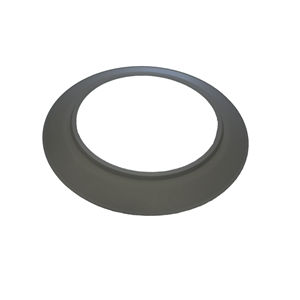
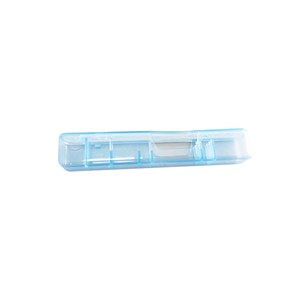
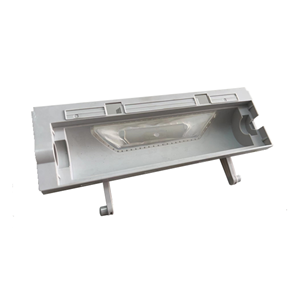
Chafer Disc, As the name suggests, it is a specialized auxiliary material used for isolating and protecting the bead area during tire production. During the vulcanization and molding stages of tires, the bead, as the core part that tightly adheres to the tire and wheel hub, has extremely high requirements for dimensional accuracy and surface smoothness. If there are no high-quality partitions for isolation and support, the tire beads are prone to adhesion, deformation, or mechanical damage during processing, resulting in the entire tire being scrapped. Therefore, an excellent Apex Holder is actually an important guarantee for tire yield.
Among numerous partition materials, PP bead partition stands out mainly due to the excellent physical and chemical properties of polypropylene (PP) material itself. The density of PP material is extremely low (usually around 0.905g/cm ³), which means that PP bead separators have sufficient strength while greatly reducing the operational burden and logistics costs of workers. More importantly, PP material has excellent chemical corrosion resistance and extremely low water absorption rate (less than 0.01%), which allows it to maintain absolute dimensional stability in the face of complex high-temperature, high humidity environments and various chemical additives in tire production, without expansion or brittleness.
From real product data, high-performance PP bead separators perform outstandingly in terms of mechanical properties. High quality PP bead separators are usually made of high crystallinity polypropylene raw materials, with a tensile strength of generally over 35MPa and a bending modulus of up to 1500MPa. This means that they are not easily broken or undergo plastic deformation when subjected to enormous tension on tire beads. In addition, in order to adapt to the high temperature environment during tire vulcanization, the heat resistance of such separators is also crucial. Their thermal deformation temperature can usually be stable above 110 ℃ (0.45MPa load), ensuring reliability under extreme working conditions.
With the increasingly stringent pursuit of environmental protection and lightweight in the automotive manufacturing industry, the research and development of PP bead separators are also constantly iterating. At present, modified PP materials have been widely used in the industry, which further enhance the impact resistance and rigidity of separators by adding toughening agents or mineral fillers. At the same time, in response to the call for green manufacturing, recyclable recycled PP materials have also been introduced into the production of tire bead separators, effectively reducing carbon emissions while maintaining performance indicators such as tensile strength ≥ 28MPa.
In summary, although PP bead separators are only a small link in the tire production chain, they are a solid bridge connecting process and quality. The evolution history of PP tire bead separators from basic physical isolation to lightweight, high-strength, and environmentally friendly today is also a microcosm of the modern automotive industry's pursuit of excellence.