Tire bead separator: a key application of PP material in tire manufacturing
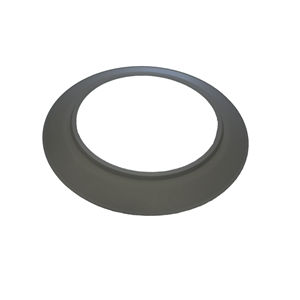
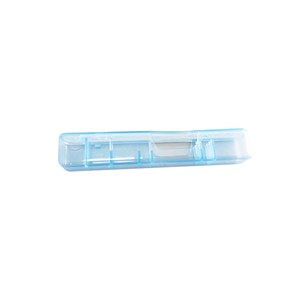
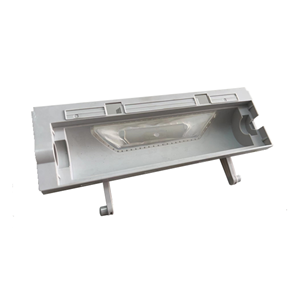
In the complex process of tire manufacturing, the bead separator is an important auxiliary material to ensure the quality of tire molding, and its performance directly affects the quality of the final product. In recent years, polypropylene (PP) bead separators have gradually become the mainstream choice in the industry due to their excellent physical properties and economy. This type of product not only solves the problems of aging and unstable size of traditional materials, but also achieves performance breakthroughs through technological innovation.
The core advantage of PP bead separators comes from material properties. Polypropylene itself has high crystallinity, which allows it to maintain structural stability even at vulcanization temperatures of 130-150 ℃, and its thermal deformation temperature can reach over 110 ℃. Taking the modified PP partition produced by a certain enterprise as an example, its tensile strength reaches 35MPa and bending modulus is 2000MPa, which is much higher than that of ordinary polyethylene materials. This high-strength characteristic ensures that the partition is not easily deformed during repeated vulcanization processes, and its service life can reach 3-5 times that of ordinary partitions.
In terms of dimensional accuracy, the manufacturing process of PP bead separators has achieved micrometer level control. Through precision extrusion molding technology, the thickness tolerance of the product can be controlled within ± 0.05mm, and the surface roughness Ra value is less than 0.8 μ m. This high-precision surface treatment not only avoids pitting defects in the tire bead area, but also improves the fit between the tire and the wheel rim by more than 15%. According to actual test data from a certain tire company, the size consistency qualification rate of the tire bead area increased from 92% to 99.6% after using PP separators.
Chemical corrosion resistance is also an important advantage of PP bead separators. During the vulcanization process, the partition needs to be in long-term contact with rubber additives and release agents, and ordinary materials are prone to swelling or degradation. PP material has natural tolerance to acids, bases, and oils. After 72 hours of immersion testing, its mass change rate is less than 0.5%, and its volume expansion rate is less than 1%. This stability ensures that the partition will not contaminate the rubber during long-term use, ensuring the physical performance of the tire.
In terms of environmental characteristics, PP tire bead separators are made of recyclable materials, and there are no harmful substance emissions during the production process. After its service life is over, it can be 100% recycled and reused, reducing industrial waste by about 30% annually compared to traditional wooden or paper partitions. According to statistics from a large tire factory, the comprehensive adoption of PP separators can reduce solid waste emissions by more than 200 tons per year.
With the development of tire manufacturing towards high precision and green direction, the technological upgrade of PP bead separators is still ongoing. By adding nano reinforcement materials, the new generation of products has achieved improved temperature resistance to 180 ℃ while maintaining excellent impact resistance. These technological advancements not only reduce tire manufacturing costs, but also provide important guarantees for improving tire safety and reliability.
Changshu Yongchengsheng Hardware Products Co., Ltd. specializes in the production and sales of tire bead separators and PP tire bead pads. If you need them, please contact us at+86-13506249539; Contact email: ljd706627@gmail.com