Thermal mechanical coupling behavior and interface debonding mechanism analysis of Apex Holder
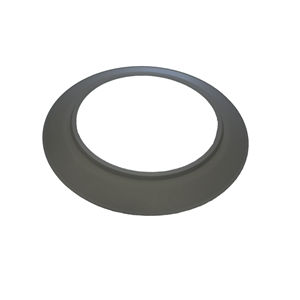
In the study of tire vulcanization kinetics, academia and engineering often focus on the adhesive force between the cross-linked network of rubber and steel cord, while neglecting the influence of PP bead separators as temporary boundary conditions on the geometric morphology of the bead. In fact, at the moment when the vulcanizing machine is closed, the bead area is in a typical thermo mechanical coupling field. At this point, the rubber tray is not only a static isolator, but also a functional component that can withstand high temperature creep and high pressure compression. A deep understanding of its micro interface behavior and macro mechanical response is the key to optimizing the manufacturing process window of tires.
1、 Crystallinity and high temperature creep resistance
As a semi crystalline polymer, the properties of polypropylene (PP) are highly dependent on the size and distribution of spherulites. The dimensional stability of the Bead Spacer in high-temperature sulfurization environments (usually 140 ℃~170 ℃) is not solely determined by its melting point, but depends on its crystallinity and crystal morphology.
Industrial grade tire bead separators usually use co polymerized PP or add nucleating agents to increase the crystallization rate. High crystallinity means stronger resistance to creep. Under the enormous clamping force of the vulcanizing machine, if the crystallinity of the partition is insufficient, the polymer chain segments will undergo irreversible sliding, resulting in thinning or radial expansion of the partition. This microscopic deformation can directly cause the phenomenon of "pressure deviation" at the bottom of the tire bead, which in turn affects the radial force fluctuation (RFV) of the finished tire. Therefore, one of the core indicators for evaluating the quality of a PP tire bead separator is its compression permanent deformation rate at high temperatures.
2、 Interface Wettability and Critical Surface Tension
From a thermodynamic perspective, the ease of separation between rubber and bead separators depends on the work of adhesion at the interface between the two. Untreated raw rubber usually has a lower surface tension (about 30 mN/m). If the surface tension of PP bead separators is higher than this value, according to the Young Dupr é equation, the rubber melt will spontaneously wet the surface of the separator, leading to severe "adhesive" phenomenon.
In order to solve this interface chemistry problem, the manufacturing process of high-performance PP bead separators focuses on regulating surface energy. By fluorination treatment or plasma grafting technology, fluorine-containing groups can be introduced on the surface of PP or surface polarity can be reduced, reducing its critical surface tension to below 22 mN/m. This low surface energy physical barrier prevents rubber molecules from spreading thermodynamically, thus achieving a "non stick" effect at the microscopic level. This is more durable and environmentally friendly than relying solely on physical isolation with release agent coatings.
3、 Thermal conduction hysteresis and temperature gradient
Although PP material itself is a poor conductor of heat, during the vulcanization process, the PP bead separator acts as a "relay station" for heat transfer. Due to the partition being located between the heat source (vulcanization mold) and the cold source (room temperature tire bead), there must be a temperature gradient inside.
Research has shown that the thickness tolerance of the partition (usually in the ± 0.02mm range) significantly affects the uniformity of heat flow. If the local thickness is too large, the heat transfer in that area will lag, resulting in insufficient sulfurization of the corresponding position of the tire bead triangle rubber (under sulfurization); On the contrary, it may lead to over sulfur. Therefore, precision manufactured bead separators, through strict control of thickness consistency, are actually adjusting the thermal history curve of the vulcanization reaction to ensure uniform distribution of cross-linking density across the entire bead cross-section.
4、 Fatigue Cumulative Damage and Life Prediction
The failure mode of PP bead separators is usually manifested as edge microcracks or center hole expansion. This is due to the cumulative fatigue damage caused by repeated mechanical loads and thermal cycles. At the microscale, the amorphous segments of PP gradually lose their elasticity during repeated thermal expansion and cooling shrinkage, ultimately leading to the formation of craze.
By establishing an Arrhenius model to analyze the service life of tire bead separators, it can be found that the endpoint of their service life is often not fracture, but an increase in surface roughness. When the surface roughness Ra value exceeds the critical threshold, sulfur and other additives in the rubber will penetrate the micro pores, causing the partition surface to become sticky and ultimately losing its demolding function.
Changshu Yongchengsheng Hardware Products Co., Ltd. specializes in the production and sales of tire bead separators and PP tire bead pads. If you need them, please contact us at+86-13506249539; Contact email: ljd706627@gmail.com