The invisible cornerstone behind tire manufacturing: the technological evolution and environmental innovation of the Beam Spacer
Behind the tire, a masterpiece of mechanical and material science, lies countless intricate craftsmanship details. Among them, the tire bead, as a key part for the tire to engage with the wheel rim, directly determines the safety and stability of vehicle driving in terms of its molding quality. In the molding process of this critical part, a often overlooked auxiliary material - the tire bead separator, is playing an indispensable role as the "invisible cornerstone". Its technological evolution and environmental innovation are quietly driving the progress of the entire industry.
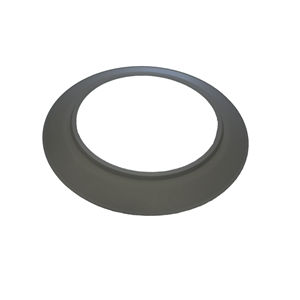
The core function of the tire bead separator is to provide precise positioning and physical isolation for the steel wire ring and multi-layer rubber material in the initial stage of tire formation. On the tire forming drum, uncured rubber has extremely high viscosity. Without effective isolation, components are prone to misalignment or adhesion, resulting in distorted bead structure. The tire bead separator is precisely embedded between the steel wire ring and the sidewall rubber through its specific geometric shape and physical strength, supporting and maintaining the design contour of the tire bead, preventing the rubber material from flowing or collapsing under its own weight or processing stress. This precise physical support ensures that the tire bead maintains the perfect cross-section required by the drawing before entering the vulcanizing machine, providing a reliable anchoring foundation for the tire.
With the continuous improvement of precision and performance requirements in the tire industry, the material science of tire bead separators has also undergone an evolution from general to specialized. Modern tire bead separators must maintain structural stability for a long time in high temperature and high pressure environments ranging from 150 ℃ to 170 ℃, while resisting chemical corrosion from rubber vulcanizing agents. Therefore, the industry generally adopts high-density special kraft paper or high-performance synthetic fiber composite materials. These materials not only have excellent wet dry strength to cope with humidity changes in production environments, but also have extremely low thermal shrinkage rates. The dimensional change rate of high-end products after 180 ℃ heat treatment is strictly controlled within 1%, ensuring that their own deformation will not cause any interference to the precise tire bead structure. In addition, the special isolation agent coated on the surface of the partition is also crucial. It needs to maintain chemical inertness in the early stage of vulcanization to prevent adhesion, and can be uniformly decomposed or integrated into the rubber material in the later stage of vulcanization, without affecting the final bonding strength.
To ensure that every partition is capable of fulfilling its rigorous mission, its production process follows a quality control standard of almost "zero defects". Firstly, dimensional accuracy is the lifeline. A high-precision laser rangefinder is used to conduct a full inspection of the thickness, width, and cross-sectional curvature of the partition, with tolerances controlled within a very narrow range of ± 0.05mm to achieve a perfect fit with the tire bead. Secondly, physical performance testing is indispensable, including the determination of tensile strength, tear strength, and flexural strength, to ensure that the partition is not damaged or broken during automated handling and forming processes. The most crucial aspect is thermal stability testing, which simulates a real vulcanization environment and monitors the dimensional stability of the partition under high temperature and pressure and the reaction of the surface coating in real time, ensuring that it can provide reliable isolation and support throughout the entire molding cycle.
The application of tire bead separators is a perfect combination of standardization and high customization in the manufacturing industry. Although their basic functions are the same, there are completely different customization requirements for the size, hardness, and cross-sectional curvature of the partition for tires of different specifications and uses. For example, the partition used for giant mining tires can have a thickness of over 0.8mm to support massive tire blanks weighing several tons; The partition used for high-performance sports car tires that pursue ultimate handling strives for lightness and precision, with a thickness often controlled at around 0.3mm. Tire manufacturers usually impose extremely strict technical parameters on partition suppliers based on the vulcanizing machine model and the specific structure of the tire. Any small deviation may cause defects in the bead area of the entire batch of tires, resulting in huge economic losses.
In today's world where sustainable development has become a global consensus, the environmental performance of tire bead separators is increasingly becoming a focus of technological innovation. Traditional partition materials are often difficult to handle after completing their mission, causing long-term environmental burdens. For this reason, the industry is actively developing biodegradable and environmentally friendly separators, or using recyclable recycled fiber materials. For example, a new type of separator made by combining modified polylactic acid (PLA) with plant fibers has significant environmental advantages while maintaining excellent thermal stability. It is worth noting that the degradation of this material does not occur naturally, but requires specific industrial composting conditions. This type of facility requires precise maintenance of ambient temperature at 58 ℃± 2 ℃, as well as appropriate humidity and microbial activity, in order to initiate efficient biodegradation processes. Under these controlled conditions, the molecular chains of the material will accelerate their breakage, achieving a disintegration rate of over 90% within 90 days, ultimately converting into water and carbon dioxide, truly achieving a green cycle from cradle to cradle.
In summary, although the tire bead partition is small, it is an indispensable part of the precision chain in tire manufacturing. It ensures precise support and stable performance, ensuring that every aspect of the tire manufacturing process is under control. The development process of tire bead separators, from the breakthrough of materials science to the innovation of environmental protection technology, is a microcosm of the entire manufacturing industry's pursuit of excellence and embrace of green. When we enjoy every safe and smooth trip, we should not forget that it is these seemingly small but crucial auxiliary components that, with their silent persistence, have forged a solid guarantee for our travels.
Changshu Yongchengsheng Hardware Products Co., Ltd. specializes in the production and sales of tire bead separators and PP tire bead pads. If you need them, please contact us at+86-13506249539; Contact email: ljd706627@gmail.com