PP tire bead pad: the first "mold" for tire uniformity
In the precision chain of tire manufacturing, the forming quality of the steel wire ring and apex rubber directly determines the uniformity and dynamic balance performance of the final product. However, in the long journey from fitting the drum to vulcanization, there is a crucial yet easily overlooked tool - the PP tire bead pad. It is not only a load-bearing tool, but also a temporary "mold" to maintain the geometric accuracy of the tire bead.
Engineering breakthrough of thermoplastic materials
Why can Rubber Tray replace traditional metal trays or cardboard? The answer lies in the precise matching of material science and manufacturing pain points.
Firstly, modified polypropylene (PP) has excellent fatigue resistance and resilience. In automated production lines, partitions need to withstand thousands of stacking, grabbing, and falling cycles. The unique crystalline structure of PP material endows it with excellent impact resistance, and it can maintain toughness even in sub zero environments (such as cold chain logistics or winter storage), making it less prone to brittle fracture and foreign objects.
Secondly, the low surface energy characteristics of PP solve the stubborn problem of "adhesive". Unsulfided triangular rubber usually contains high aromatic oils, which are easily adhered to metals or other polar materials. The surface of Plastic tray is smooth and chemically inert, effectively blocking the adhesion between the rubber material and the tray, ensuring that the surface of the tire bead is smooth without trailing or drawing when taken out, which is crucial for the bonding accuracy of subsequent molding processes.
The Geometric Significance of Imitation Design
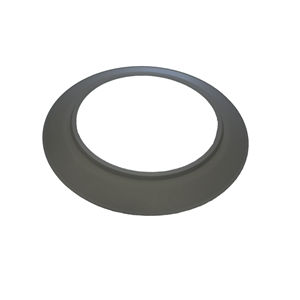
The design of the tire bead partition is not simply a circular hole, but a mirror copy of the tire bead cross-sectional profile.
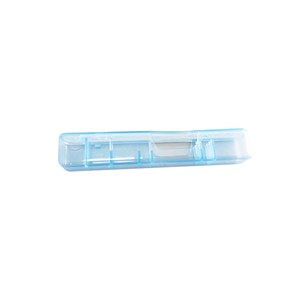
High quality PP tire bead separators are usually designed with specific curvature (R-angle) and positioning steps on the inner wall. After the triangular film is wrapped, it is placed in the partition, and the inner wall of the partition will exert an inward restraining force on the tire bead, offsetting the stress relaxation of the rubber material itself. Especially for high hardness all steel radial tire triangle rubber, the curved sidewall of the partition can effectively prevent ovality deviation or height collapse during static storage, ensuring that the size tolerance of each tire bead is within the micrometer range.
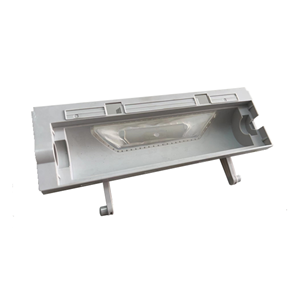
In addition, the design of reinforcement ribs at the bottom of the partition is also a discipline. A reasonable arrangement of reinforcement positions can not only increase the overall stiffness of the partition, prevent the middle depression, but also form air convection channels during stacking, which helps to dissipate the waste heat of the rubber material and avoid the risk of early vulcanization (burning) caused by heat accumulation.
Automation adaptation and clean production
In modern smart factories, PP bead separators also need to have extremely high dimensional stability. The injection molding process ensures the consistency and interchangeability of each batch of partitions. The chamfering of its edges and the design of the positioning hole in the center are designed to complement the vacuum suction cup or gripper system of the robotic arm, achieving unmanned circulation.
At the same time, PP material is non-toxic, odorless, and non absorbent, avoiding the drawbacks of paper partitions being damp, moldy, or contaminating the adhesive material with debris. It can withstand conventional cleaning and disinfection, meeting the increasingly stringent cleanroom standards of the tire industry.
Changshu Yongchengsheng Hardware Products Co., Ltd. specializes in the production and sales of tire bead separators and PP tire bead pads. If you need them, please contact us at+86-13506249539; Contact email: ljd706627@gmail.com