Invisible Armor in Tire Manufacturing: The Innovative Path of PP Tire Bead Pad
In the precision chain of modern tire manufacturing, subtle deviations in each link may lead to quality hazards in the final product. As an indispensable auxiliary consumable in the tire molding and circulation process, the Bead Spacer plays a key role as the "invisible armor". It not only carries the responsibility of protecting the core component of the tire bead from damage, but also directly affects the automation efficiency and yield of the production line. Among various materials, PP tire bead pads, with their excellent engineering plastic properties, are gradually replacing traditional materials and becoming the mainstream choice on high-end tire production lines.
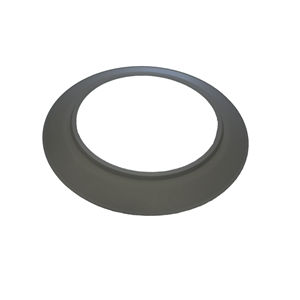
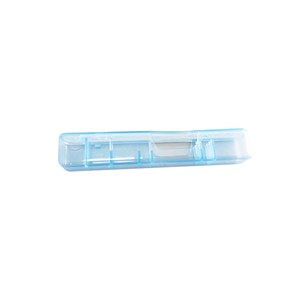
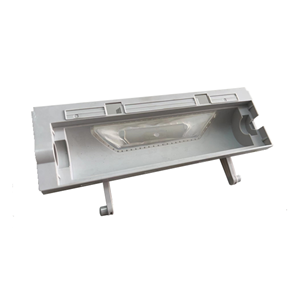
The tire bead is a key part of the tire installed on the wheel rim, usually made of high-strength steel wire wrapped around it, and has extremely strict requirements for dimensional accuracy and surface condition. During the storage, transportation, and pre vulcanization molding stages of tires, if there is a lack of effective physical isolation, the tire beads are prone to deformation and scratches due to mutual compression or contact with foreign objects. Rubber tray was born to address this pain point. It is precisely placed between adjacent beads to provide support, positioning, and isolation, ensuring that each bead maintains a perfect geometric shape before entering the vulcanization mold.
With Industry 4.0 setting higher standards for production line consumables, the advantages of PP bead separators are becoming increasingly prominent. Polypropylene (PP), as a semi crystalline thermoplastic, inherently possesses excellent fatigue resistance and bending resistance. Compared to traditional wooden or paper separators, PP bead separators exhibit strong stability in humid and oily factory environments, without mold or deformation due to water absorption, and without losing support due to long-term stacking.
From the perspective of real product data, a qualified industrial grade PP tire bead separator has undergone rigorous testing for all its physical indicators. In terms of mechanical properties, the tensile yield strength of high-quality PP bead separators is usually stable between 30MPa and 38MPa, which means it can withstand large external forces without fracture. In terms of impact resistance, the notch impact strength of its simply supported beam is generally required to reach 4.0 kJ/m ² or above, ensuring that it is not easily broken when grabbed by automated robotic arms or accidentally dropped. In addition, in order to adapt to the high temperature environment of tire vulcanization, the Vicat softening point of such separators is often designed above 140 ℃, ensuring that they can maintain rigidity and flatness when in contact with high-temperature tire embryos, without dimensional deviation caused by thermal deformation.
In addition to basic physical protection, modern PP tire bead separators also incorporate more ingenuity in their structural design. In order to further reduce the contact area with the bead and avoid uneven heat transfer or indentation during vulcanization, many PP bead separators adopt support rib structures with pores or honeycomb hollow designs. This design not only significantly reduces the weight of the single partition (some lightweight products can control the weight between 200g-300g), reduces the labor intensity of workers, but also effectively improves air circulation and accelerates the cooling or preheating process of the tire bead.
From traditional wooden partitions to modified PP bead partitions today, this seemingly small iteration of auxiliary materials reflects the tire manufacturing industry's relentless pursuit of ultimate quality and green production. In the future, with the integration of biodegradable materials and intelligent recognition technology, PP bead separators will play a more important role in the intelligent transformation of the tire industry.