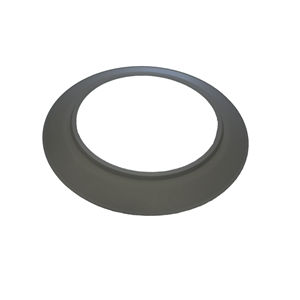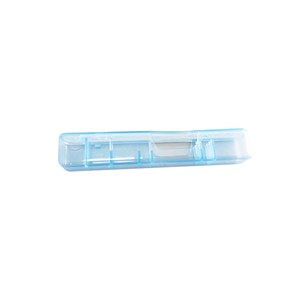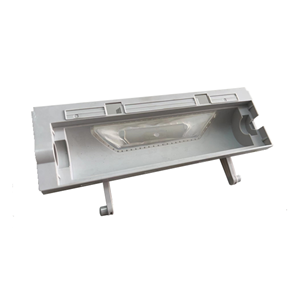
Beam Spacer and PP Tire Beam Pad: Invisible Guardians in Tire Manufacturing
In the precision manufacturing process of tires, every step is related to the performance and safety of the final product. Among them, the tire bead, as a key part connecting the tire and the wheel rim, requires special attention to detail during its manufacturing process. In this process, the Bead Spacer plays an indispensable role, especially with the advancement of material technology, PP tire bead pads have gradually become mainstream in the industry due to their excellent performance.
The core function of Bead wrap
The tire bead is the "anchor point" that connects the tire and the wheel rim, consisting of a bead core, a curtain layer edge, and a bead wrap. During the tire molding process, rubber tray is mainly used to isolate and protect the rubber and skeleton materials in the bead area, preventing adhesion or contamination during transportation before coiling, storage, and vulcanization.
Specifically, Triangle rubber tire partition needs to have the following characteristics:
Isolation: Effectively prevents uncured rubber from sticking and maintains the stability of the tire bead shape.
Pressure resistance: It can withstand a certain amount of pressure without being damaged when the tire bead is coiled.
Easy peelability: In the subsequent tire molding process, it can be easily peeled off from the surface of the rubber material without leaving any residue.
The rise of PP tire bead separators
Traditional partition materials may include kraft paper or ordinary plastic film, but with the increasing demand for production efficiency and environmental protection, PP bead partitions stand out with their unique advantages.
PP, Polypropylene is a thermoplastic material. PP bead separators are usually made of polypropylene hollow boards or foam boards. Compared to traditional materials, it has the following significant advantages:
Lightweight and High Strength: PP material has low density, making it easy to handle and automate operations, while also possessing sufficient mechanical strength to protect the tire beads.
Chemical corrosion resistance and anti-aging: In the complex environment of the factory, PP bead separators can resist the erosion of oil and chemicals, and are not easily deformed by moisture, with a long service life.
Easy to clean and environmentally friendly: The surface is smooth, not prone to dust accumulation, and can be recycled and reused after damage, in line with the green development trend of modern manufacturing industry.
Dimensional stability: PP material has small dimensional changes under different temperature and humidity environments, which can ensure the accurate geometric shape of the tire bead during storage.
Synergistic effects in production processes
In the tire manufacturing process, the machine will straighten the steel wire and wrap it in rubber, and then roll it into a suitable size bead hoop. At this stage, the tire bead separator is placed between the contact surface or winding layer of the tire bead.
Especially when making vacuum tires, the sealing performance of the tire bead is extremely high. PP tire bead separators can ensure the cleanliness and smoothness of the tire bead rubber surface, avoiding surface defects caused by adhesion, thereby ensuring that the inflated tire bead can form a tight "self tightening seal" with the wheel rim to prevent air leakage.